

ESG, health, and citizenship
No one falls ill, or heals, alone
I have learned, in the exam room and beyond it, that a person’s health is almost always the health of the systems they live in. This page gathers the idea that sustains my work and what I do with it inside institutions.
I have been in practice long enough to recognize when a clinical problem does not fit inside the body in front of me. The blood pressure that will not stabilize despite the right medication, the sleep that will not come in a noisy, unsafe home, the child who struggles at school because there is no clean water at home. The diagnosis lives in a person, but the causes tend to live in the neighborhood, in the workplace, in the air, and in the web of people around them. When I treat only the body and return the person to the same system that made them ill, the problem comes back.
Health begins far from the exam room
This clinical intuition has a name and an evidence base. In 2008, a World Health Organization commission chaired by Michael Marmot, a British epidemiologist who spent his career measuring inequality, condensed years of research into a phrase that became a motto, closing the gap in a generation. The conclusion was uncomfortable and simple. Most of what determines whether someone lives longer or shorter, with more or less suffering, lies outside the healthcare system, in the conditions in which a person is born, grows, works, and ages.
Seven years later, in 2015, a commission convened by the Rockefeller Foundation with The Lancet went a step further and reminded us that these social conditions depend, themselves, on the health of ecological systems. There is no healthy population on a sick planet. That is why the vocabulary of ESG — environmental, social, and governance — stopped sounding like corporate jargon to me. For those who care for people, these three letters are the grammar of who falls ill and who manages to recover.
What I learned at Yale about citizenship
I took this question with me to the Program for Recovery and Community Health at Yale University, where I was a visiting researcher, a center that studies how people living with severe mental illness get their lives back, and not merely symptoms under control. It was there that I immersed myself in the idea of citizenship in mental health that Michael Rowe, a medical sociologist and researcher at the program, developed over many years and gathered in his 2015 book. For Rowe, belonging rests on five concrete pillars — rights, responsibilities, roles, resources, and relationships — sustained by a sixth that is harder to measure: the feeling of being part of something.
That lens changed the way I listen. Stabilizing a condition is the beginning of the work and not its end, because health, at its core, is the possibility of taking up a place among others again. To recover is to regain a role, a network, a life of one’s own. What family medicine had already taught me about long-term bonds, Yale handed back to me as a method. To care is to return someone to the city, not only to the clinic.
From the idea to the table where decisions are made
A thesis that stays in the exam room reaches one person at a time. That is why I chose also to occupy the spaces where the system is designed. As a consultant to Instituto Afya, I help those who train physicians and organize healthcare at scale turn good intentions into social impact, making that impact intentional by design and measuring its results, so that social determinants, mental health, and longitudinal care truly enter medical education and management. As a board member and founding member of Instituto Unimed Uberlândia, I help build governance and social impact in my own city, in the place where I practice, where decisions come with faces and surnames I know.
Governance, seen up close, is not bureaucracy. It is how a good clinical intention keeps working after I leave the room.
Ubuntu, a signature
There is a word from the Bantu languages of southern Africa that carries all of this better than any report, ubuntu. The Nguni proverbs condense it into one sentence — umuntu ngumuntu ngabantu, a person is a person through other persons — which the Kenyan philosopher and theologian John Mbiti, of the Kamba people, put into English as “I am because we are, and since we are, therefore I am.” The South African philosopher Mogobe Ramose, one of the contemporary voices of Bantu thought, goes further and describes ubuntu as a philosophy of being itself, a being that is not defined in isolation, but as relation and movement, and that is only realized in the encounter with the living community, with those who came before and with the land that sustains it. It is an ancient idea and, at the same time, the most contemporary of ideas in healthcare, that a person does not exist outside the bonds and systems that surround them, and that each person’s health is inseparable from the health of the whole, of other people, of institutions, and of the environment itself.
It is not an isolated intuition. The South African archbishop Desmond Tutu made ubuntu a grammar of reconciliation; the Nigerian philosopher Ifeanyi Menkiti argued that it is the community that constitutes the person as a person; and the Ghanaian Kwame Gyekye reminded us that recognizing this does not erase the individual, it simply returns them to their fabric of bonds. From distinct African traditions, they all converge on the same refusal to think of anyone apart from the web that sustains them. And in Portuguese, my own language, the Mozambican philosopher Severino Ngoenha, alongside interlocutors such as José Castiano, makes this relation a matter of citizenship, defining democracy itself as each person’s inclusion in society and full participation in its life. The ecological dimension of this same relation finds its voice in Bantu authors. The Kenyan Wangari Maathai, of the Kikuyu people and a Nobel Peace Prize laureate, wrote that we are called “to assist the Earth to heal her wounds and in the process heal our own, to embrace the whole creation in all its diversity, beauty and wonder”; and the Rwandan philosopher Alexis Kagame devoted his work to the Bantu philosophy of being, a being that is not conceived in isolation, but as a living force in relation to the other forces of life.
This is the signature of my work, to see the whole person within the systems they live in. If you have come this far and this way of seeing care speaks to what you are looking for, whether in an exam room, in an institution, or in a project, let’s talk. The best ideas about care, almost always, are born from a good conversation between people who refuse to do care by halves.
A record of impact
 Instituto AfyaSocial impact consultant, focused on strategy and outcome measurement in medical education and mental health.
 Instituto Unimed UberlândiaBoard member and founding member, dedicated to governance and social impact in Uberlândia.
 Yale UniversityTraining in citizenship-oriented mental health care at the Program for Recovery and Community Health.
Family and Community Medicine · CRM-MG 74.511 · RQE 69038 · Master’s in Psychology, Federal University of Uberlândia
References
- MARMOT, M. et al. Closing the gap in a generation: health equity through action on the social determinants of health. The Lancet, v. 372, n. 9650, p. 1661-1669, 2008. WHO Commission on Social Determinants of Health. DOI: 10.1016/S0140-6736(08)61690-6.
- WHITMEE, S. et al. Safeguarding human health in the Anthropocene epoch: report of The Rockefeller Foundation-Lancet Commission on planetary health. The Lancet, v. 386, n. 10007, p. 1973-2028, 2015. DOI: 10.1016/S0140-6736(15)60901-1.
- ROWE, M. Citizenship and Mental Health. Oxford: Oxford University Press, 2015. Program for Recovery and Community Health, Yale University.
- MBITI, J. S. African Religions and Philosophy. London: Heinemann, 1969.
- RAMOSE, M. B. African Philosophy Through Ubuntu. Harare: Mond Books, 1999.
- TUTU, D. No Future Without Forgiveness. New York: Doubleday, 1999.
- MENKITI, I. A. Person and Community in African Traditional Thought. In: WRIGHT, R. A. (ed.). African Philosophy: An Introduction. Lanham: University Press of America, 1984.
- GYEKYE, K. Tradition and Modernity: Philosophical Reflections on the African Experience. New York: Oxford University Press, 1997.
- NGOENHA, S. E. Os Tempos da Filosofia: Filosofia e Democracia Moçambicana. Maputo, 2004.
- MAATHAI, W. Nobel Lecture. Oslo: The Nobel Foundation, 2004.
- KAGAME, A. La Philosophie bântu-rwandaise de l'Être. Brussels: Académie Royale des Sciences Coloniales, 1956.

Dr. Marcelo Gobbo Jr.
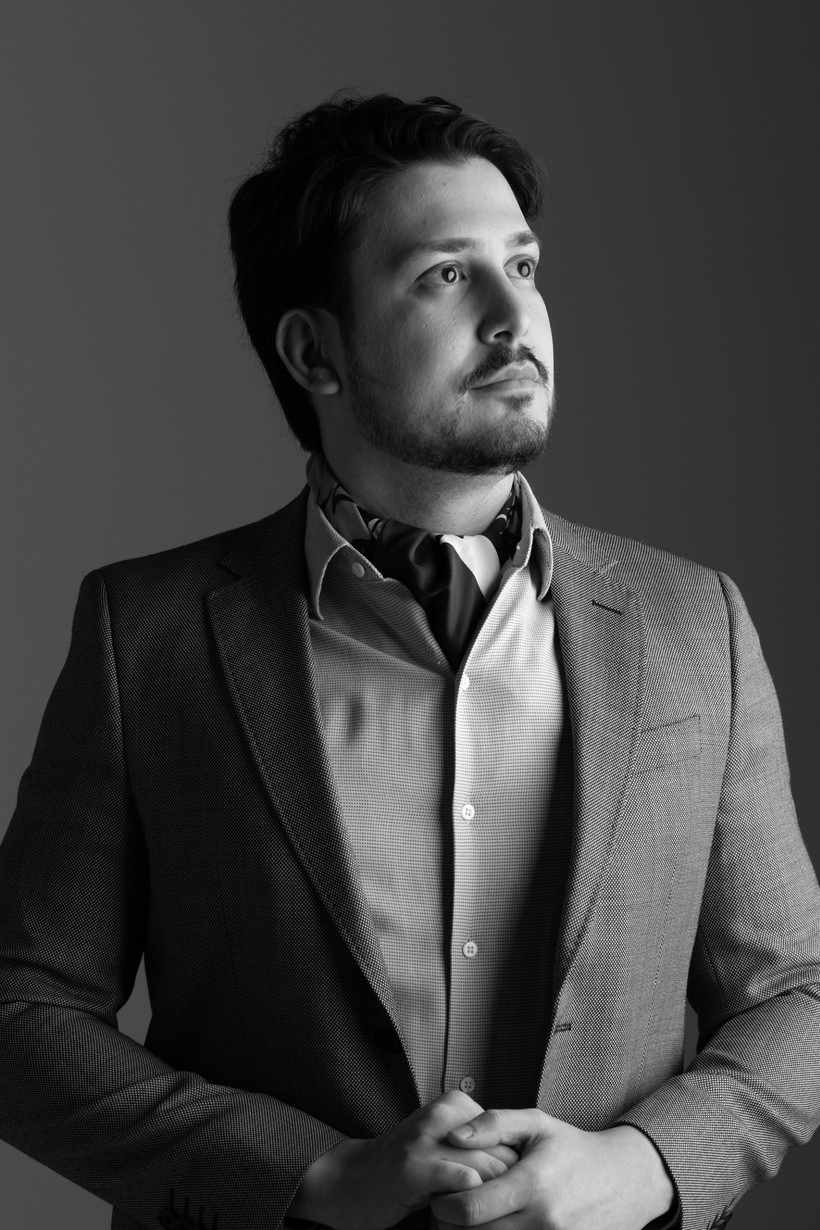
Family and Community Physician (CRM-MG 74.511 · RQE 69038), with a master’s degree in Psychology from the Federal University of Uberlândia and a Laboratory Associate appointment in the Department of Psychiatry at Yale School of Medicine, based at the Program for Recovery and Community Health. He cares for neurodiverse families and people living with severe mental illness, in person and remotely.