

The doctor
The doctor who walks alongside you
Who is writing here, the path that brought me to this consulting room, and what it changed in the way I listen.
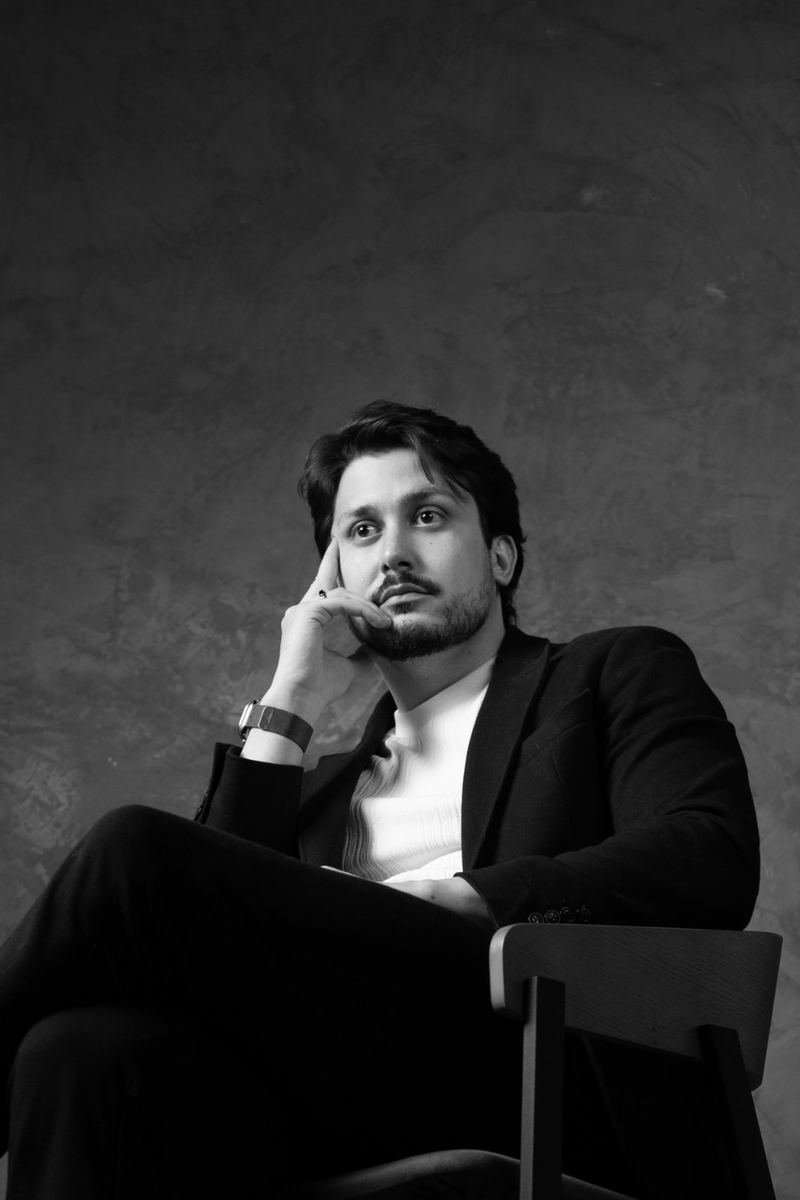
If you have read this far, you probably want to know who is on the other side of the room before you book an appointment. That seems fair to me, and it is what I am going to tell you here. I am a family and community physician, qualified in 2017, and since medical school I have built my training and my practice around mental health.
If I had to put in one sentence what nearly a decade of practice has taught me, it would be that the person sitting in front of me is rarely the only one involved in what they came to tell me. A child who does not sleep usually arrives together with a household that had already stopped sleeping before them. And when an adult slips back, the people around them have almost always run out of strength first. The chart opens under one name, and the suffering rarely fits inside it.
That, repeated year after year, organized everything that came afterward. Everything that came afterward was an attempt to answer the same question from another angle, which is how to care for someone without separating them from the people they live with.
Where this began
I studied medicine at the Federal University of Uberlândia and qualified in 2017. From my student years on, mental health stopped being one subject on the curriculum and became the thing I looked for in every rotation. Along that road I cared for people in psychological distress in the consulting room and remotely, one to one and in groups, including six years in a mental health outpatient clinic.
Six years in the same clinic do something to a doctor that no course does. You stop seeing episodes and start seeing trajectories. You watch the same person in crisis, then steady, then back again, then steady for much longer, and you learn that what holds the good stretch together is almost never the medication adjustment alone. It is the sister who started coming to appointments, the employer who agreed to a different shift, the neighbor who notices before anyone else that something is beginning to change.
Before medicine, a violin
Before anything on my curriculum vitae, there was a violin. I started at nine and never stopped, and I say without exaggeration that a good part of what I know about listening I learned there, long before medical school. Anyone who plays in an ensemble finds out early that the most important instrument is not their own. You spend most of the rehearsal listening to everyone else so you know where to come in, when to hold a line and when to stay quiet.
There is also the tedious part, which is repetition. You play the same passage thirty times knowing that today’s gain will be small and that it will only show months later. That is a fair description of following someone through treatment. The appointments where nothing dramatic happens are exactly the ones that build the result you will be able to see much further down the road.
Why I chose family medicine
I did my residency in family and community medicine at Fundação Pio XII, in Brazil, and I chose this specialty because in it time is a working instrument rather than an obstacle to get past. Barbara Starfield, a pediatrician and researcher at Johns Hopkins who spent her career measuring what primary care does to the health of a population, showed in 2005, with Leiyu Shi and James Macinko, that health systems built around primary care produce less illness and fewer deaths, and distribute health more equitably, both within and between countries. The mechanism she described is not technological. It is relational.
Thirteen years later, in 2018, a group led by Denis Pereira Gray, an English family doctor, reviewed 22 studies from nine countries with very different cultures and health systems, and found that in 18 of them, greater continuity of care with the same doctor went with lower patient mortality. The authors made a point of recording the conclusion that a technology-loving medicine finds uncomfortable, which is that despite successive and substantial technical advances, interpersonal factors continue to matter.
Knowing someone for years is part of what makes the consultation work, not a pleasant detail of it.
Psychology came in through the research door
I hold a master’s degree in Psychology from the Federal University of Uberlândia. I went back to the same university where I trained as a doctor, this time from the other side of the corridor, because there were questions my clinical training was not managing to answer on its own, such as how you measure suffering, how you describe what happens inside a family when one of its members falls ill, and what changes in a person when they stop being treated as a walking diagnosis.
The master’s gave me method, so that I would not trust my own clinical impression blindly, which is the easiest thing to do and the most dangerous. Since then, when I write or give advice, I try to know where each claim comes from before I repeat it.
The women who taught me how to look
My strongest references in psychiatry are not the ones that appear first in the textbooks. The main one is Nise da Silveira, a Brazilian physician who, on arriving at the psychiatric hospital of Engenho de Dentro, in Rio de Janeiro, refused to apply what were then considered the most advanced treatments available, lobotomy and electroshock. In 1946 she created the Occupational Therapy Section there, where patients painted and modeled clay instead of being restrained, and in 1952 she founded the Museum of Images of the Unconscious, which still holds thousands of those works. She was not running ward entertainment. She was asserting that those people had an inner world, and that it was worth looking at.
What I learned from her was a stance, not a technique. Nise spent her career disagreeing, in writing and in practice, with a consensus that humiliated the people it was meant to protect, and she sustained that disagreement for decades inside the very institution that opposed her. Whenever I catch myself about to accept a course of action only because it is what everyone does, she is the one I think of.
The cats, and why they belong in this story
Nise also brought animals into the hospital and called them co-therapists, and she wrote about it in Gatos, a emoção de lidar, published in 1998. Her idea is less charming and more serious than it sounds, because what a relationship with an animal offers someone who is very unwell is a form of attachment that asks for no explanation, demands no performance and does not interpret what you say.
I admit a personal interest here, because I am a committed cat person. Anyone who shares a house with a cat knows there is no such thing as convincing a cat of anything. You learn to wait, not to intrude, to notice small signals, and to understand that trust is built at the other one’s pace and not at yours. It is not the worst school in the world for someone who will spend a career sitting across from people who arrive wary, and with good reason.
Yale, and three words I brought back
I was a visiting researcher at the Program for Recovery and Community Health at Yale University, a center that studies how people living with severe mental illness get a life back, and not only symptoms under control. I came back with three words that now organize the way I work, recovery, peer support and citizenship.
Recovery does not mean cure. It means that a person can rebuild a life with meaning, with relationships, work and a project of their own, while still living with a serious condition, and that treatment has to be measured by that too, and not only by symptom remission. It changed the question I ask at the end of an appointment. It is not only whether the symptoms have improved, it is what has become possible again in this person’s life since the last time we met.
Peer support is care offered by someone who has been through it. Larry Davidson and colleagues at the same program reviewed, in 2012, the evidence and the accumulated experience of teams that include people with mental illness in the caring role, and described concrete effects, among them stronger engagement with treatment and fewer emergency and hospital visits. What those workers offer, and no diploma offers, is living proof that there is life after the worst moment.
Citizenship is where the first two lead, and it is the one that moved me most, because it names an idea I had been feeling my way toward in the clinic without being able to formulate. Michael Rowe, a psychologist and researcher at the same center, describes belonging as something built along five concrete dimensions, rights, responsibilities, roles, resources and relationships, held together by a sixth element that is harder to measure, the sense of being part of something.
That lens changed the way I run an appointment. Stabilizing a condition became the beginning of the work rather than its end, because the next question, the one that actually matters to the person living it, is whether they will manage to take a place among others again.
Ubuntu, the word that was missing
The formulation I brought back from Yale found its proper name when I came across Bantu thought. There is a word in the Bantu languages of southern Africa that carries all of this better than any report, ubuntu, summed up in the Nguni proverb umuntu ngumuntu ngabantu, a person is a person through other people, which the philosopher John Mbiti rendered as I am because we are. Mogobe Ramose, a South African philosopher, goes further and describes ubuntu as a philosophy of being itself, a being that is not defined in isolation and comes into its own only in the encounter with a living community.
I call this my signature because it sits underneath every decision I make in the room, and it is also what took me out of the consulting room and into governance, medical education and social impact. I told that whole story in ESG, health, and citizenship.
The family as the unit of care
I am currently completing postgraduate training in Family Therapy, which followed naturally from everything that came before. Once the focus stops being only the identified patient and starts to include the whole family system, what I ask changes, who I invite into the room changes, and what counts as improvement changes with it. An exhausted mother who finally sleeps is a clinical outcome, even when the chart open in front of me is her son’s.
That is why, in my practice, carers and relatives come in as people who also need care, and who rarely ask for it.
Teaching is part of the job
I teach Clinical Communication, Humanization and Professionalism, and Public Health, on the medical course at IMEPAC-Araguari, a Brazilian medical school. Among other things, I teach students to ask the question nobody taught me to ask as an undergraduate, which is who else lives in this story. Many of them arrive superbly prepared to recognize an arrhythmia and with no idea what to do in front of a person who is crying. The good news is that this can be learned, and learned early.
Writing is the other half of the work
I am associate medical editor for Family and Community Medicine at Portal Afya, a Brazilian medical content platform. I write for the press about mental health and family life, I created and present Hora da Saúde, a health program on the Brazilian channel Rede Vida Educação, and every two weeks I write the newsletter The Thread of Care. Translating science for the people who live with the problem is the same clinical work, done at scale.
A family that understands what is happening to it makes better decisions, asks more of the health system and blames itself less. A fair part of what I watch people suffer in the consulting room started with wrong information that somebody repeated with a lot of conviction.
The research I chose to do
When I was able to choose what to investigate, I chose the mental health of doctors and medical students. In recent years I have taken part in studies on quality of life and psychological distress in this population, published in journals such as PLOS ONE and BMJ Open, including a 2026 paper on gender disparities in the mental health and quality of life of Brazilian physicians.
The choice is not far from clinical work, it is the other side of it. A system that makes its carers ill ends up delivering care that is itself unwell, and the Brazilian figures the press has been publishing on anxiety and depression among doctors come in good part from this line of research. Caring well for someone starts with caring for whoever will be caring for them.
A system that makes its carers ill ends up delivering care that is itself unwell.
Training and careerThe full profile
Medical degree, residency, Yale, teaching, editing and board work, with registrations and credentials, in one place. See the full profile →Where I practice, and how
The practice is called Artem Curant and it is in Uberlândia, Brazil, with video-call care for the rest of the country and for Brazilians living abroad. All care is private, and that is a clinical decision before it is anything else, because it is what sustains appointments long enough for everything I have described here. I set out in detail how it works, what the formats are and where to check your health plan’s reimbursement rules in how the consultation works.
If this way of seeing care speaks to what you are looking for, for yourself or for someone in your family, the door is open.
How the consultation works
The formats of care, what happens in each meeting, and where to check your health plan’s reimbursement rules.
Understand the consultation →References
- STARFIELD, B.; SHI, L.; MACINKO, J. Contribution of primary care to health systems and health. The Milbank Quarterly, v. 83, n. 3, p. 457-502, 2005. DOI: 10.1111/j.1468-0009.2005.00409.x. Accessed via PubMed.
- PEREIRA GRAY, D. J. et al. Continuity of care with doctors, a matter of life and death? A systematic review of continuity of care and mortality. BMJ Open, v. 8, n. 6, e021161, 2018. DOI: 10.1136/bmjopen-2017-021161. Accessed via PubMed.
- DAVIDSON, L.; BELLAMY, C.; GUY, K.; MILLER, R. Peer support among persons with severe mental illnesses: a review of evidence and experience. World Psychiatry, v. 11, n. 2, p. 123-128, 2012. DOI: 10.1016/j.wpsyc.2012.05.009. Accessed via PubMed.
- ROWE, M. Citizenship and Mental Health. Oxford: Oxford University Press, 2015. Program for Recovery and Community Health, Yale University.
- SILVEIRA, N. Imagens do Inconsciente. Rio de Janeiro: Alhambra, 1981. Occupational Therapy Section of the Centro Psiquiátrico Nacional, created in 1946, and Museu de Imagens do Inconsciente, founded in 1952.
- SILVEIRA, N. Gatos, a emoção de lidar. Rio de Janeiro: Léo Christiano Editorial, 1998.
- MBITI, J. S. African Religions and Philosophy. London: Heinemann, 1969.
- RAMOSE, M. B. African Philosophy Through Ubuntu. Harare: Mond Books, 1999.
Illustrative image on this page: Junior REIS, published under the Unsplash License. Portrait: personal archive.